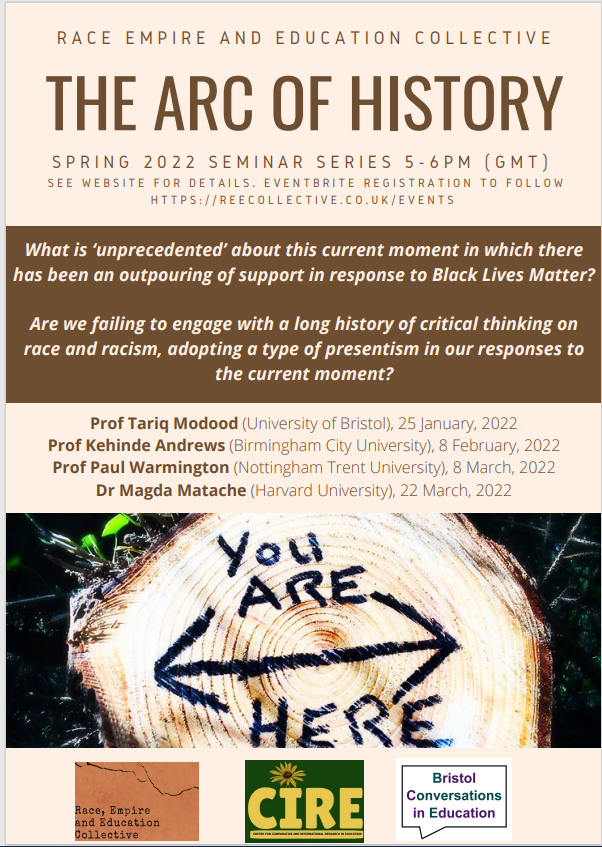
In June 2020 the world witnessed a global upsurge in Black Lives Matter (BLM) demonstrations following the murder of George Floyd, an African American, at the hands of a white American police officer. The upsurge was not an expression of a new grievance in response to police violence against black communities in the U.S. but an ongoing protest and forms of resistance against the devaluing of black lives, one which resonates across the world, including in the UK.
In the immediate aftermath of the demonstrations, criticisms arose against the actions of BLM demonstrators, for example, in relation to the defacing and toppling of statutes. In contrast, there was also an outpouring of support seen in the plethora of open letters, statements published on organisational websites, YouTube videos and symbolic actions by media heralding ‘the current moment’ as ‘unprecedented’ and as a catalyst towards achieving racial justice.
While welcome, this seminar series seeks to problematise the simplicity of such claims. Employing the notion of ‘The Arc of History’ it challenges a lack of critical focus in academic research and commentary that approaches the ‘current moment’ with a type of presentism that fails to engage effectively with the historical processes that have produced the current moment – the social, political and cultural processes and struggles over racial meaning. These concerns, although raised in different ways in scholarship and activism on race and racism, have recently been expressed by two influential scholars in the field of race and racism, Paul Gilroy and David Theo Goldberg. They note that ‘the long history of critical thinking around race and racism in some quarters [of the literature] is being effaced’ such that ‘[one] reinvents the wheel as though none of this history has already been written for the past 30 or 35 years’.

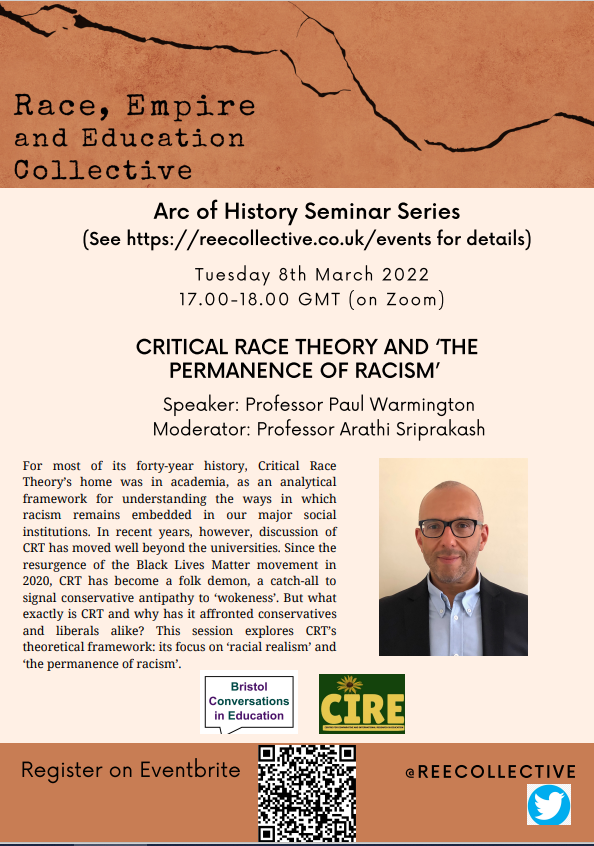
In other words, how can we speak of an ‘unprecedented’ or ‘seminal’ moment without placing the ‘current moment’ in conversation with a long trajectory of theoretical analysis and insights. Without this, we run the risk of speaking of the present as an ahistorical moment lacking a strong understanding of how the present moment has come to be, and what might come to be. Already, a year on from the mass demonstrations, national contexts such as the UK, France and the US, have seen an attack on the BLM movement – its principles, claims and actions – as well as on theoretical stances such as Critical Race Theory, which seek to expose and undermine the racist nature of social systems.
Is this the ‘unprecedented moment’ we imagined a year ago? Is this a predictable outcome based on historical insights and events? What can we learn from historical race politics and analysis in different national contexts to help us to understand and talk about the present?
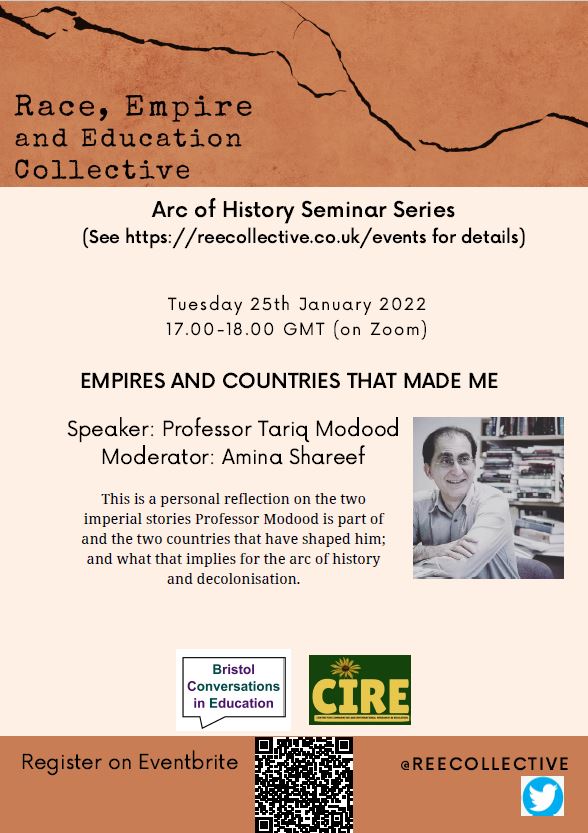
The Race, Empire and Education Collective is engaging a range of speakers to reflect on and discuss their research and activism in the relation to the ‘Arc of History’. Do they accept or reject the claim of presentism in current research and commentary on race politics and racism? How significant is an engagement with critical theorising around race and racism across an extended arc of time? How do they engage with historical race politics, analysis and theorising to shed light on the ‘current moment’ in their work and respective contexts?

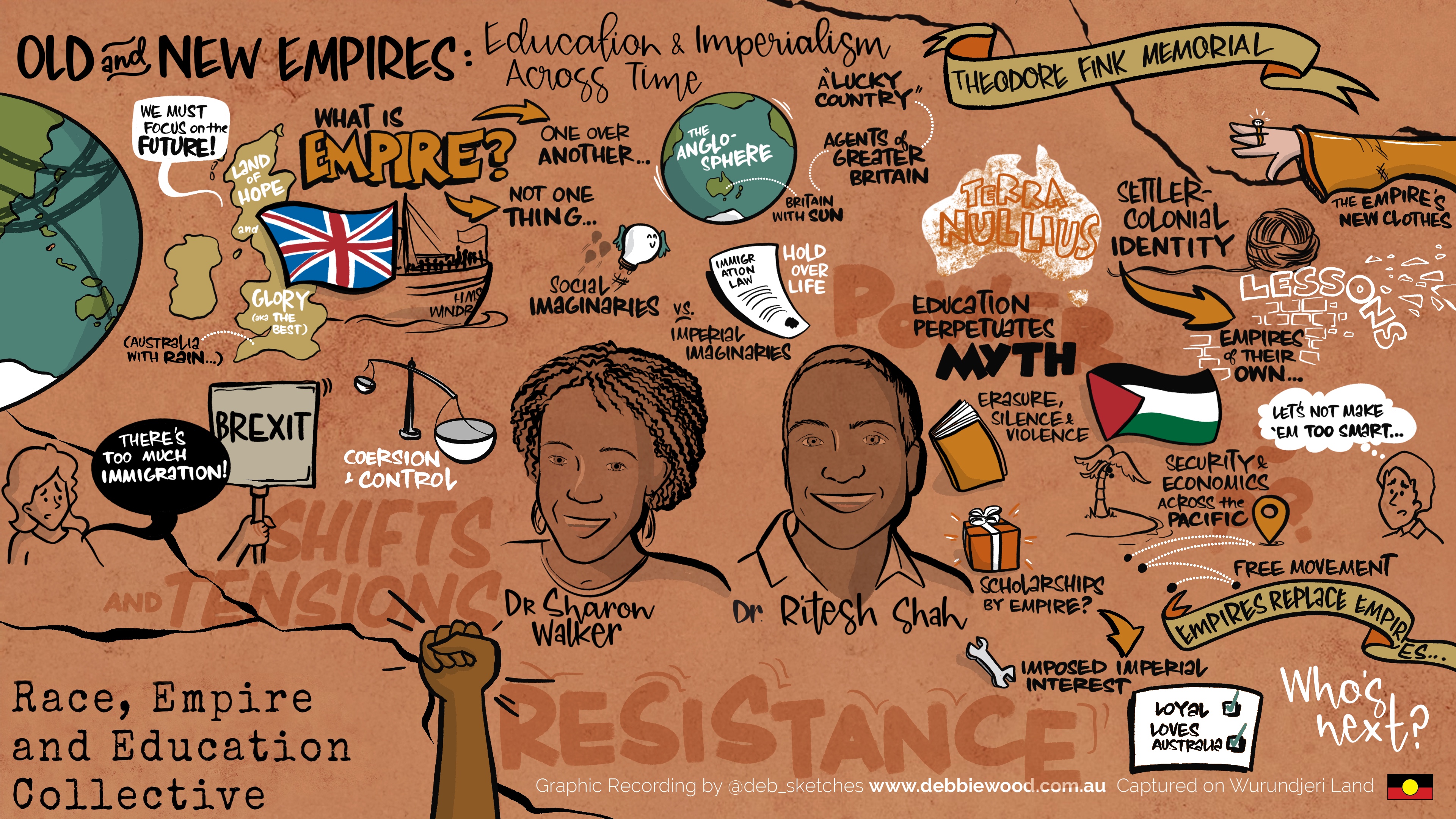

 Race, Empire and Education Collective